Venture Debt Due Diligence for Businesses: How to Prepare and Succeed
.jpg)
Venture debt is becoming a powerful financing tool for Indian startups. It helps extend the runway, protect dilution, and drive growth without relying solely on equity. But as the market shifts, lenders are becoming more cautious. They now expect higher clarity, tighter compliance, and stronger financial discipline than they did even a year ago.
This means venture debt due diligence in 2025-26 is very different from traditional diligence. It is more rigorous, more data-driven, and more focused on stability than promises. Founders who prepare for these expectations unlock better terms, faster approvals, and more negotiating power.
This guide breaks down what lenders look for, how due diligence shapes deal terms, and how one can prepare strategically. not just operationally.
Brief breakdown
- Lenders care most about stability, predictability, and compliance.
- Use the 3-layer framework: Metrics, Money, Momentum.
- Strong MIS, clean compliance, and accurate projections matter.
- Red flags like high burn or inconsistent revenue slow deals.
Why Venture Debt Due Diligence Looks Different in 2025-26?
Credit markets tightened through 2023–24, and that shift continues influencing lender behavior in 2025-26. Lenders have become more selective. They prefer stability over aggressive growth, and predictable revenue over ambitious projections.
Indian startups face additional factors:
- Stronger compliance expectations
- A push toward profitability
- More emphasis on the visibility of receivables
- Higher scrutiny of burn and runway
- More checks on governance and documentation
In earlier years, due diligence often focused on traction and investor backing. In 2025-26, the focus has shifted to predictability, consistency, and the quality of your internal systems.
Also read: Receivable Financing vs. Venture Debt: Key differences
To prepare well, you must understand what lenders really evaluate during the debt process.
What Venture Debt Due Diligence Really Covers?
Founders assume diligence is mostly about documents. In reality, documents are only part of the story. Lenders want confidence that the business can service debt without stress. They evaluate three layers:
- Business fundamentals - market, customers, team strength
- Financial discipline - forecasting, governance, internal controls
- Risk exposure - customer concentration, compliance gaps, cash-flow swings
A common mistake is presenting strong growth numbers but weak financial hygiene. Poor reporting, inconsistent MIS, or a lack of clarity can slow down deals even if the business is performing well.
Due diligence influences loan terms directly. Strong fundamentals lead to better rates. Weak fundamentals lead to tighter covenants.
Here’s a simple framework founders can use to prepare.
The 2025-26 Venture Debt Readiness Framework
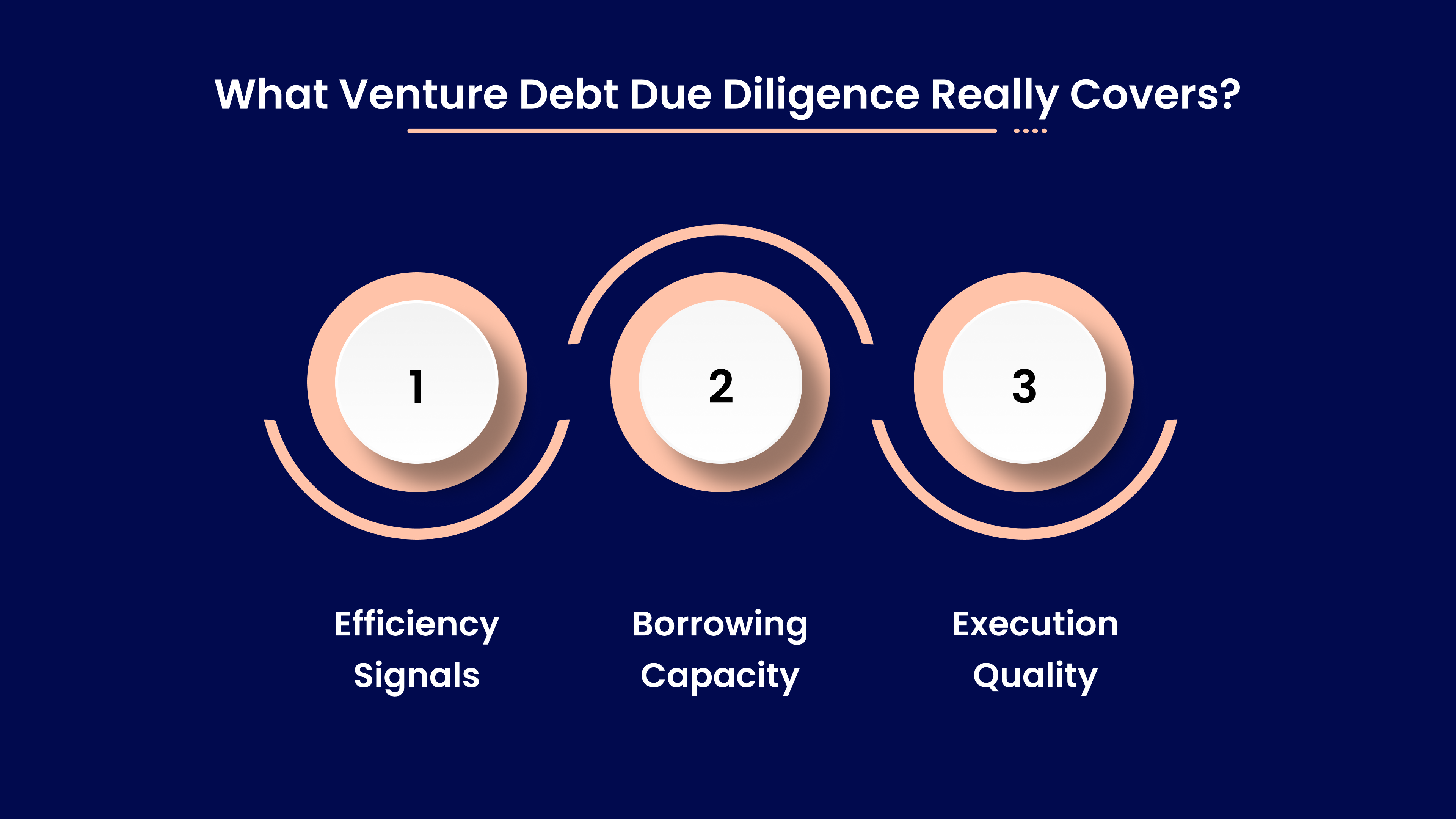
This 3-layer framework helps founders evaluate if they're ready for venture debt under 2025-26 expectations.
1. Metrics: Your Revenue and Efficiency Signals
Lenders look for signs of financial health:
- Predictable MRR/ARR
- Stable or improving margins
- Low churn
- Clear CAC payback
- Healthy burn multiple
- Reasonable customer concentration
If your revenue fluctuates sharply or your burn is rising without generating ROI, diligence becomes more difficult.
2. Money: Your Cash Flow and Borrowing Capacity
Debt is safe only when cash flow supports repayment. Lender's check:
- Operating cash flow quality
- Receivable cycles
- Payable discipline
- Cash burn rate
- Projected cash runway
- Existing liabilities
Lenders focus more on repayment logic than on growth potential alone.
3. Momentum: Your Business Traction and Execution Quality
Momentum signals show that your business is moving in the right direction:
- Growing customer pipeline
- Strong retention
- Product improvements
- Expanding use cases
- Clear roadmap for capital usage
Momentum does not need to be explosive. It just needs to be consistent.
Also read: A Comprehensive Guide to Venture Debt Funds in India
The Due Diligence Checklist Expected in 2025
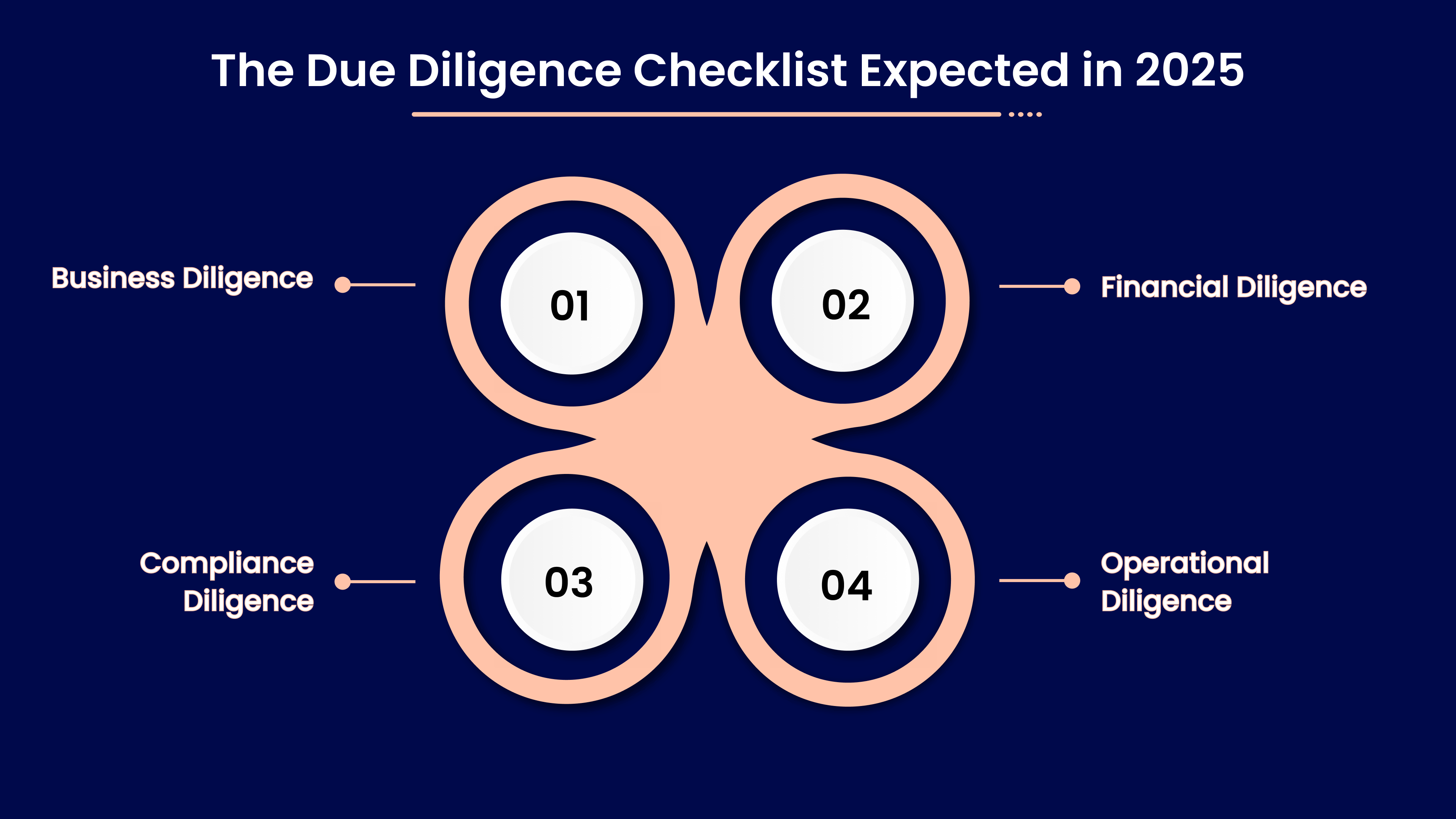
Diligence spans four buckets. Each one influences how lenders view your business and what terms they offer.
1. Business Diligence
Lenders assess:
- Market size and stability
- Customer concentration risks
- Retention and churn
- Unit economics
- Sales pipeline quality
- Breakdown of revenue streams
They look for resilience: your ability to withstand slow periods.
2. Financial Diligence
This is the most intensive part.
Lenders evaluate:
- Audited financial statements
- MIS and monthly reporting discipline
- Revenue consistency
- Gross margin trends
- Cash flow patterns
- Budget vs. actual variance
- Forecast accuracy
Clean, consistent financials significantly speed up approvals.
3. Legal and Compliance Diligence
This ensures the company is compliant and transparent.
Lender's review:
- GST filings
- PF/ESI compliance
- TDS filings
- Registrar of Companies filings
- Board resolutions
- Shareholder agreements
- Intellectual property ownership
- Contracts with customers and vendors
Even small lapses can delay or complicate disbursement.
4. Operational Diligence
This assesses your internal execution strength:
- Delivery timelines
- Contracted commitments
- Supply chain reliability
- Collections efficiency
- Team structure and capability
Operational clarity boosts lender confidence.
Once diligence is complete, lenders translate their findings into the terms they offer.
How Does Due Diligence Shape Your Venture Debt Terms?
Due diligence results directly impact your debt structure. Lenders adjust:
- Interest rate - Stable metrics = better pricing
- Tenure - Strong runway = longer repayment schedules
- Covenants - High clarity = lighter monitoring
- Security requirements - Strong financials = lower collateral demands
- Disbursement timelines - Clean compliance = faster release
Now, let's explore how founders can prepare for this process and pass it smoothly.
How to Prepare and Pass Venture Debt Due Diligence Smoothly?
Most founders worry about due diligence because it feels complex. In reality, lenders look for clarity more than perfection. These steps help you confidently prepare and move through the process without friction.
1. Clean up financials before lenders ask - Ensure your MIS, P&L, and cash-flow reports are structured and updated monthly.
2. Strengthen your receivable cycles - Shorter receivables reduce lender risk. It also shows strong operational control.
3. Build accurate projections - Your forecasts must connect with your past performance. Avoid overly optimistic assumptions.
4. Improve cash-flow visibility - Track inflows, outflows, and expected runway clearly.
5. Fix compliance gaps early - Pending GST filings or outdated statutory paperwork slows diligence more than founders expect.
6. Document your business logic - Explain your growth levers, customer base, and expansion plans in simple, clear terms.
7. Reduce unnecessary burn - High burn with unclear ROI is one of the biggest lender red flags.
Recur Club encourages structured and transparent financial practices, helping businesses stay diligence-ready throughout the year.
Even well-prepared founders encounter red flags. Let’s address them.
Common Red Flags That Slow or Break Venture Debt Deals
Lenders hesitate when they see:
- Unpredictable revenue
- Rising burn without efficiency improvements
- Customer concentration above safe levels
- Compliance delays or missing filings
- Inconsistencies in MIS statements
- Overreliance on an upcoming equity round
- Poor clarity in projections
- Weak financial governance
Mitigating these early improves approval rates and negotiation leverage.
Conclusion
Venture debt due diligence in 2025-26 rewards consistency, discipline, and transparency. Founders don’t need perfect financials. They need predictable performance, clean reporting, and a compelling narrative. A large majority of founders now prefer a venture debt partner that can simplify the full process in one place. But finding such a unified solution is not always easy.
That’s where Recur Club steps in. The platform provides startups with a fast, transparent way to access debt capital, connecting them with financing solutions from more than 125 lenders. This helps growth-stage companies find structures that fit their specific needs.
If you want to explore your options or understand what works best for your business, connect with Recur Club’s capital team today.

FAQs
1. Is venture debt due diligence harder in 2025 than in previous years?
Yes. Lenders now expect stronger compliance, clearer reporting, and more disciplined financial management.
2. Do lenders check investor details during due diligence?
Often yes. Strong investors improve confidence, but performance and governance weigh more in 2025.
3. Does poor compliance automatically disqualify a company?
Not always, but it can delay contracts and reduce negotiation leverage.
4. Can early-stage startups pass debt due diligence?
If they have predictable revenue and clean governance, yes. Even without large funding rounds.
5. How long does venture debt due diligence take?
Typically, 3–6 weeks, depending on data quality and compliance readiness.


.jpg)
.jpg)